Wednesday, March 04, 2026
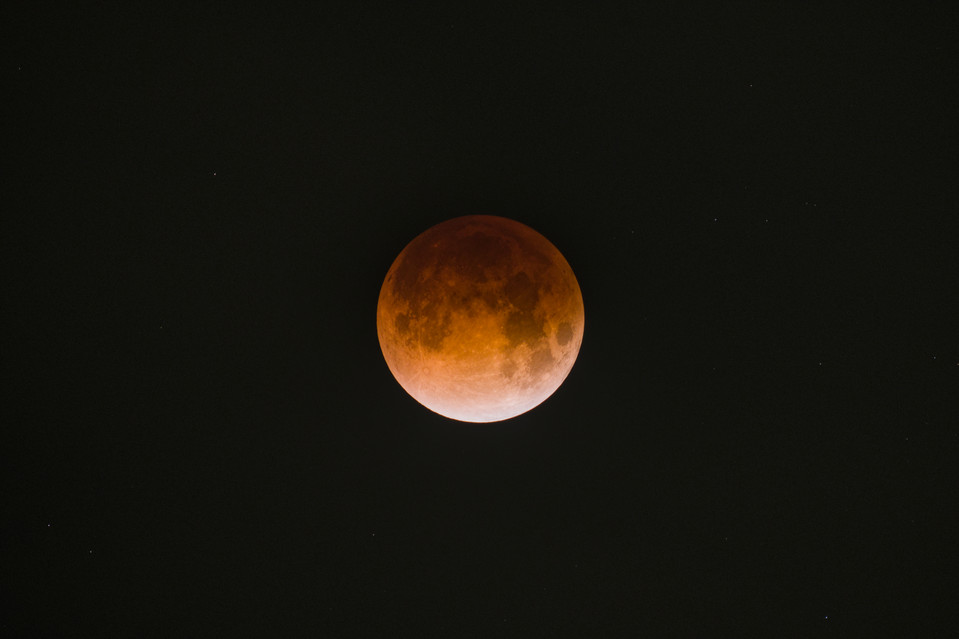
This is the total Lunar Eclipse on March 3, 2026. Even during totality, some sunlight is able to illuminate the moon, but must first pass through the Earth’s atmosphere. As the atmosphere scatters higher wavelength colors, the moon appears reddish.
Friday, February 06, 2026
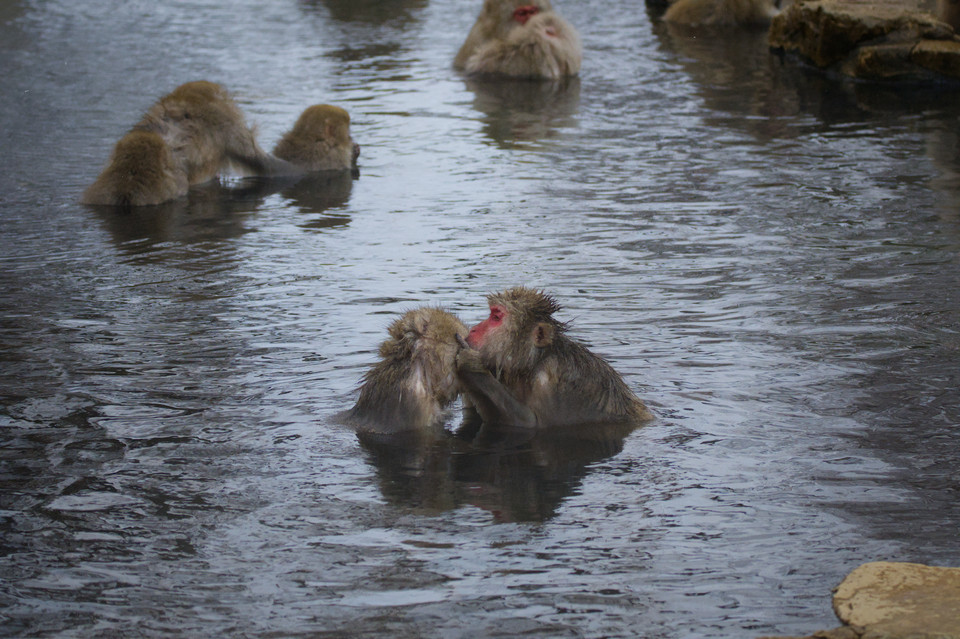
I recently returned from a trip to Nagano and Hakuba to experience winter in Japan. It did not disappoint! Near Nagano, I visited Jigokudani, a nature park with a unique troupe of Japanese macaques (commonly referred to as snow monkeys) who learned to bathe in hot springs after observing humans. To avoid sanitary issues stemming from humans and macaques sharing the same pool, a dedicated onsen was built for the monkeys.
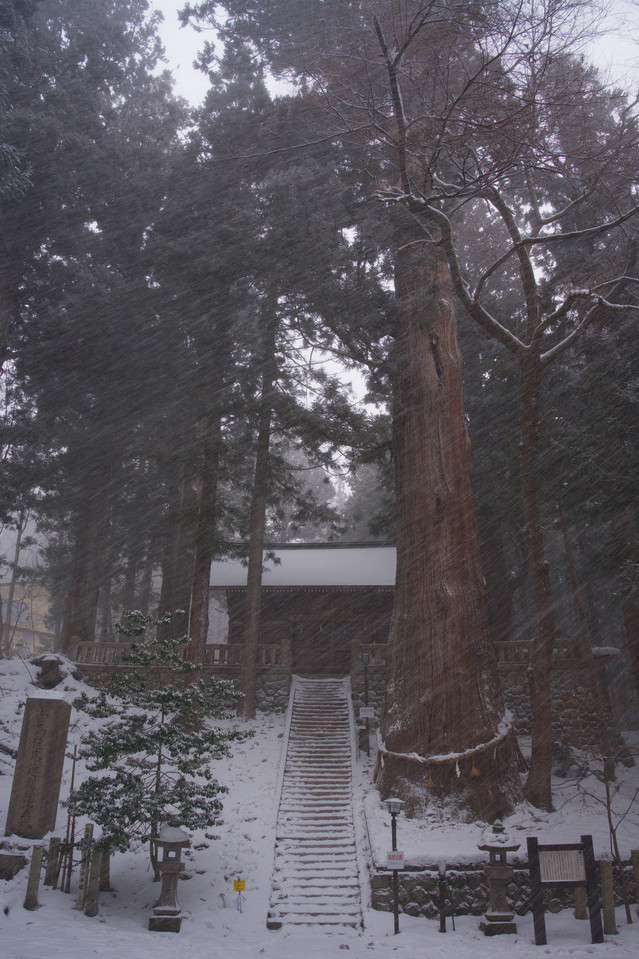
Hakuba, which is located near Nagano at the foothills of the Hida Mountains, was a picturesque paradise. Views of majestic peaks abound, and every once in a while one can also find a shrine, even in the midst of a snowstorm.
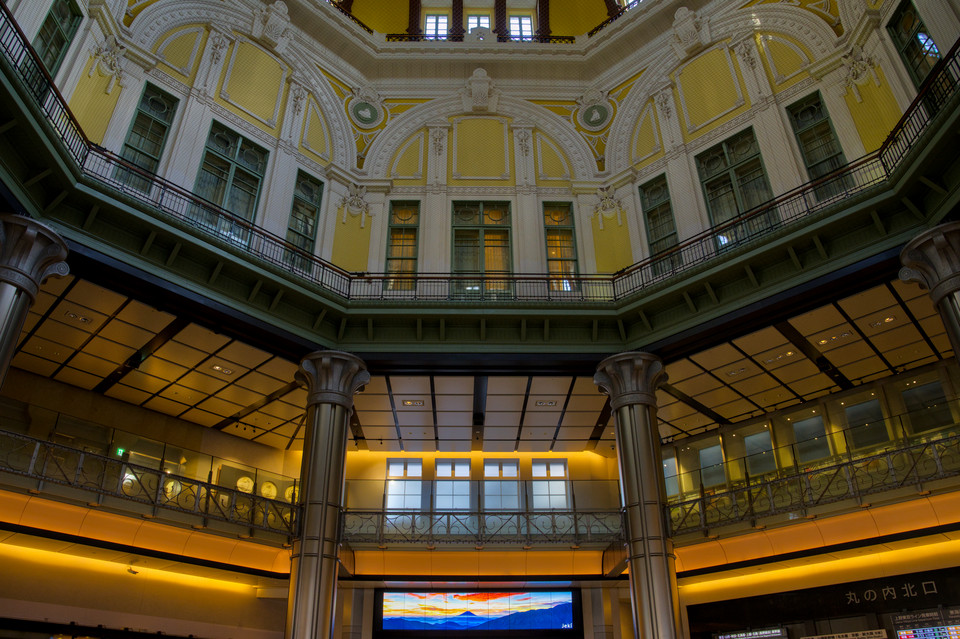
I also spent some time in Tokyo, where just transiting through Tokyo Station makes it too irresistible to admire the architecture. (I might just be a tad obsessed with Tokyo Station.)
Saturday, January 03, 2026
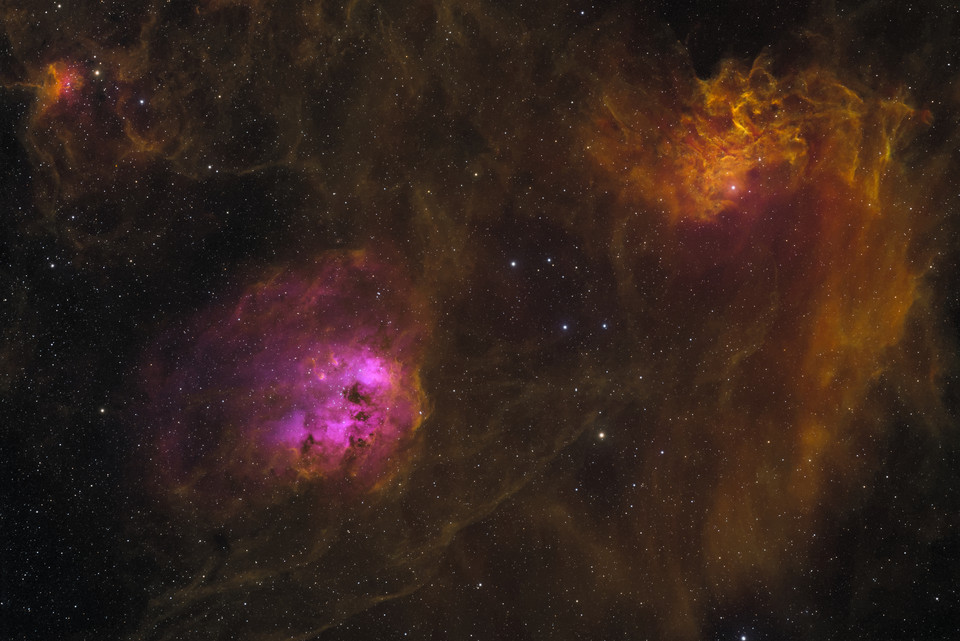
Wrapping up my astrophotography projects for December, here is the Flaming Star Nebula in HSO narrowband:
The Flaming Star Nebula, or IC 405, is the swirling fireball-shaped nebula on the right side of the image, while the Tadpole Nebula, or IC 410, is to the lower left and IC 417 is to the upper left. The star AE Aurigae could be considered the eponymous "flaming star" lighting up the nebula in the upper right.
Friday, January 02, 2026
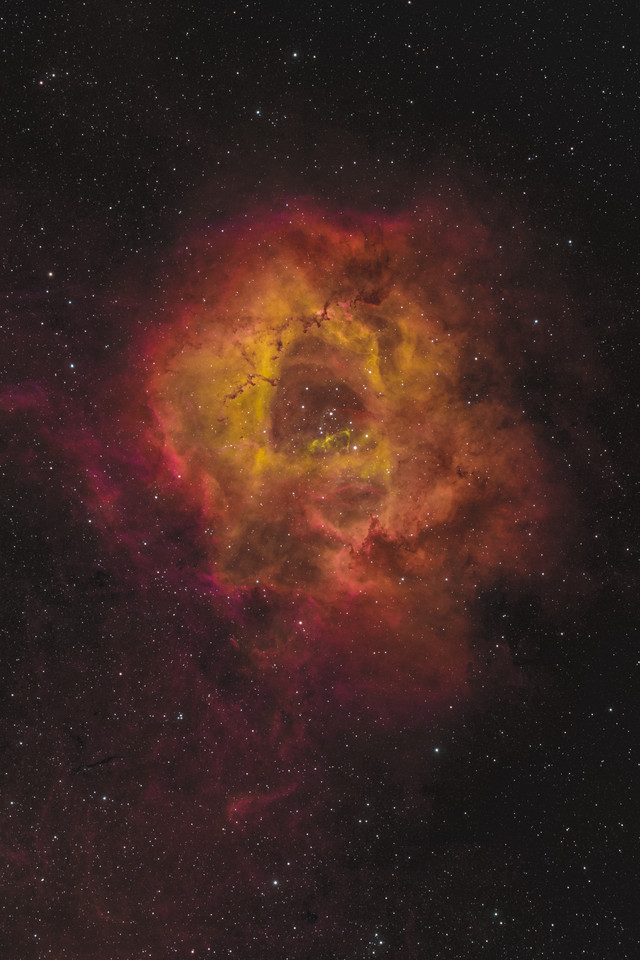
Following from yesterday’s Sunflower Galaxy, today we have the Rosette Nebula in HOS narrowband:
Thursday, January 01, 2026
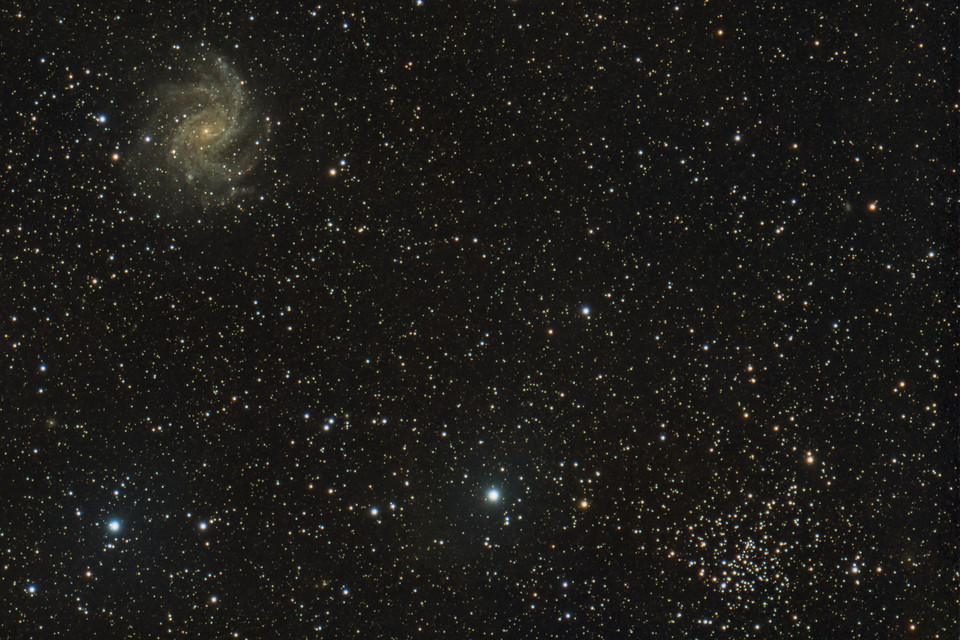
What would be more appropriate to ring in the new year than some fireworks, namely the Fireworks Galaxy along with the nearby NGC 6939 Open Cluster:
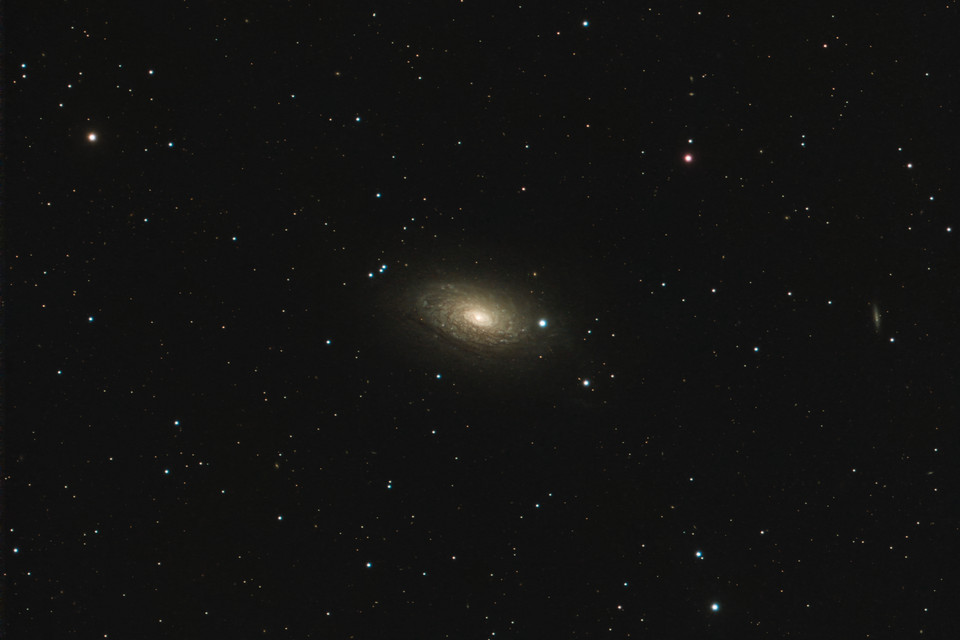
Continuing the celebration with a bouquet is the Sunflower Galaxy:
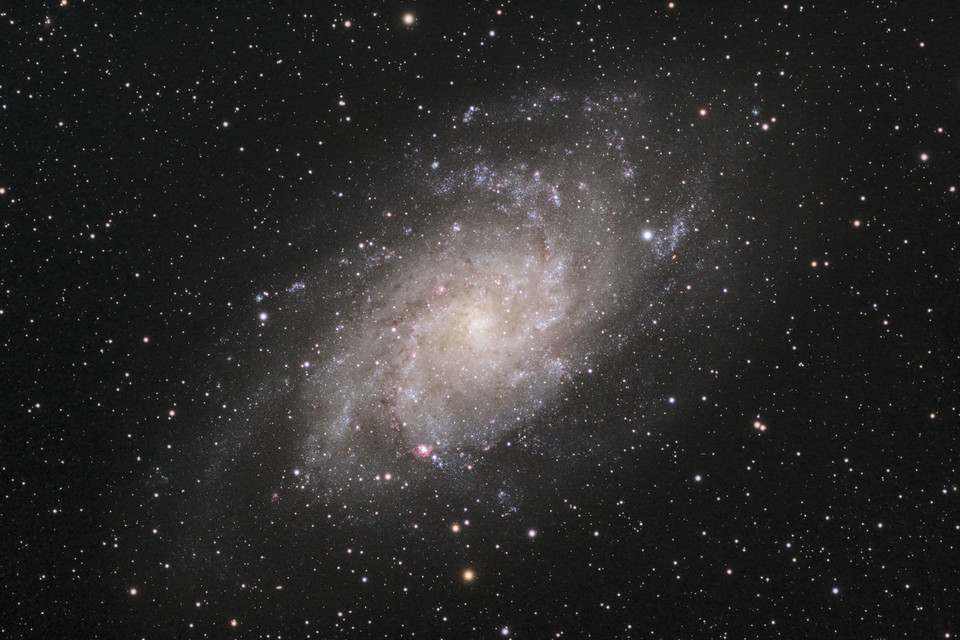
Finally we have the Triangulum Galaxy, an enormous and beautiful galaxy in the Local Group that includes Andromeda Galaxy and our very own Milky Way:
Wishing all of you starry skies and a Happy New Year!
Wednesday, December 31, 2025
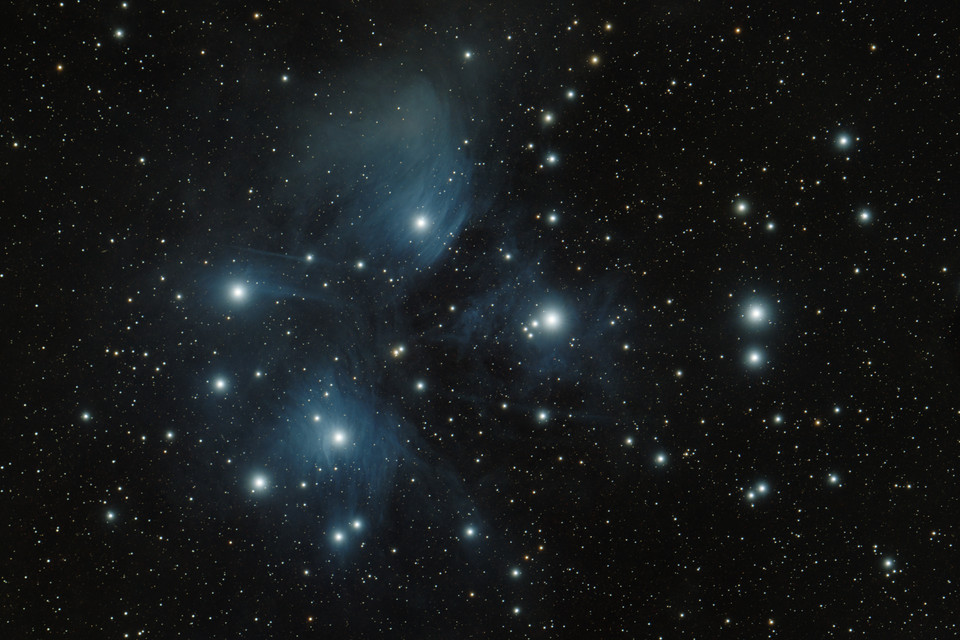
Along with the Orion Nebula, here is another favorite celestial target that I retook this month with more exposure time. This is the Pleiades, or the Seven Sisters:
Tuesday, December 30, 2025
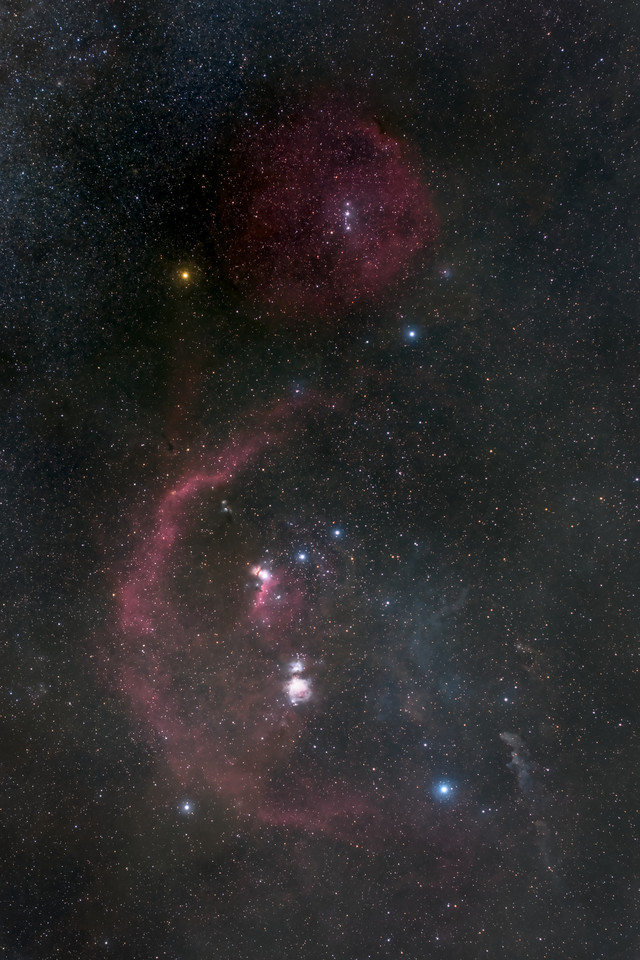
Here is a wide field image of the Orion constellation and associated molecular cloud complex:
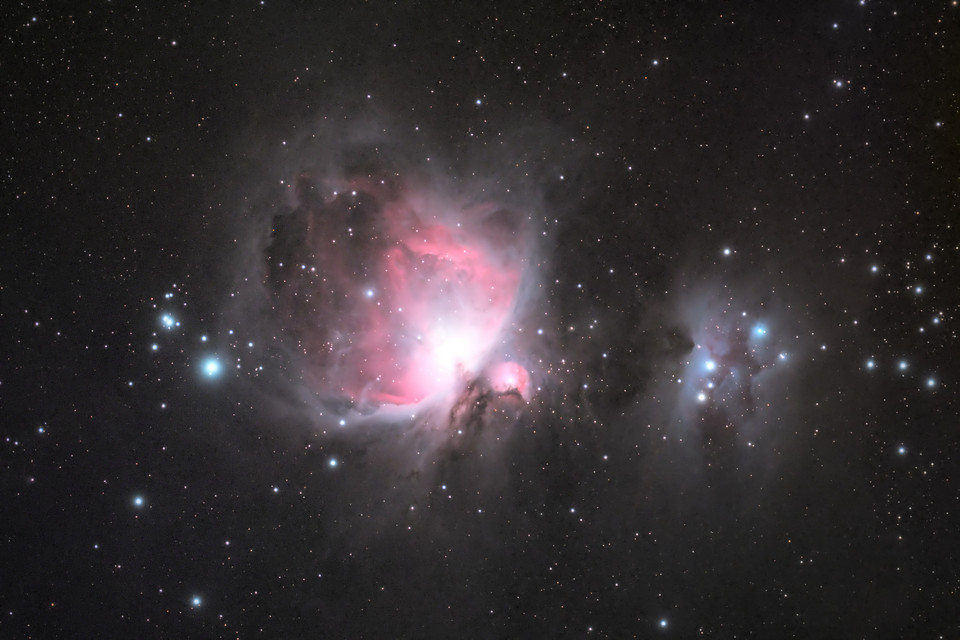
Within are various famous nebulae such as the Orion Nebula, which I revisited this month:
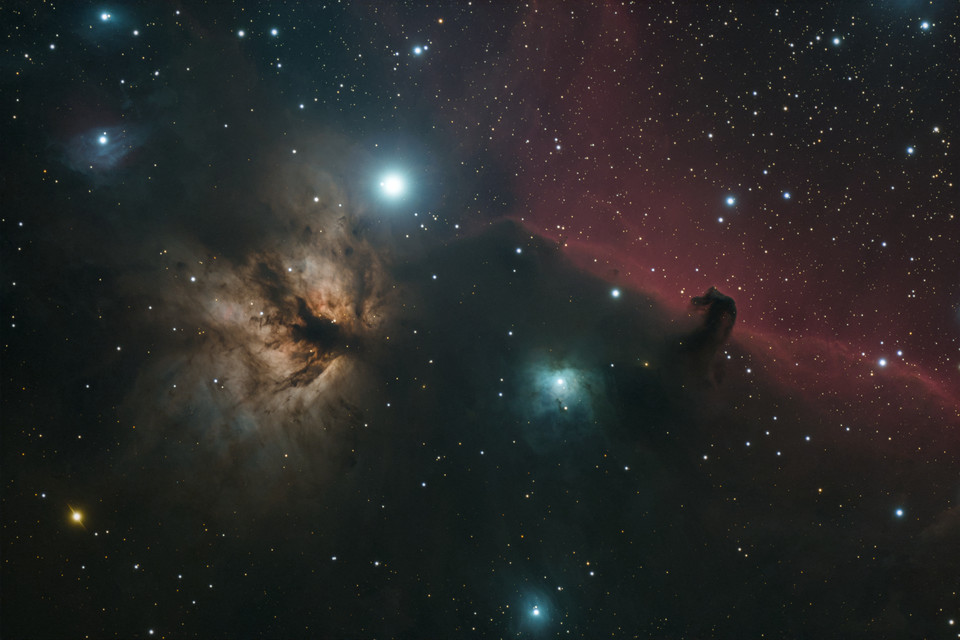
Progressing up from there, we have this breathtaking pair of the Flame Nebula (left) and Horsehead Nebula (right):
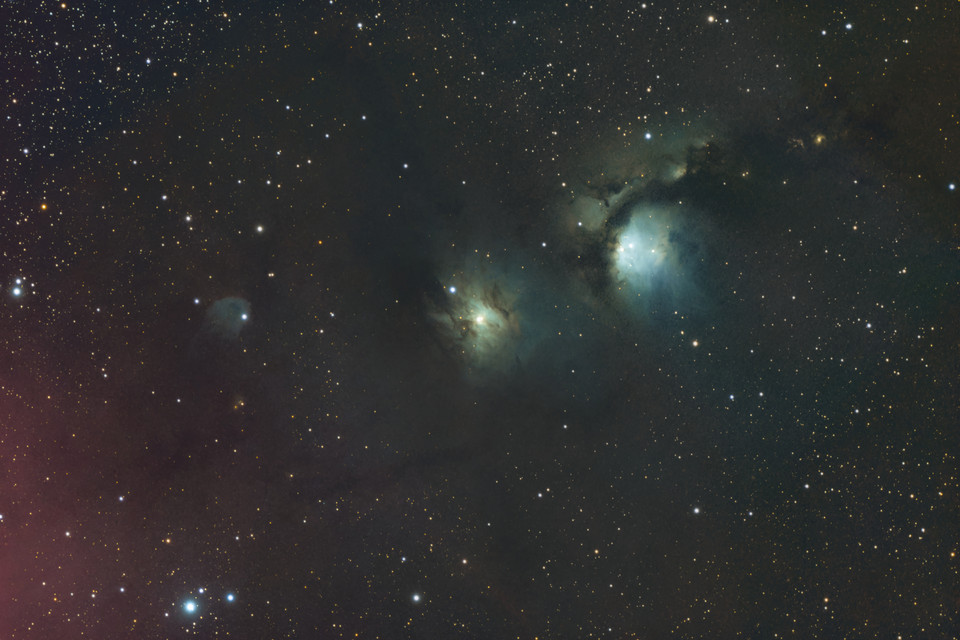
And then further up from there is Messier 78, with the reddish H-Alpha emissions from Barnard’s Loop just off in the corner:
With these spectacular sights and more, Orion is definitely the highlight of winter night skies!
Saturday, November 08, 2025
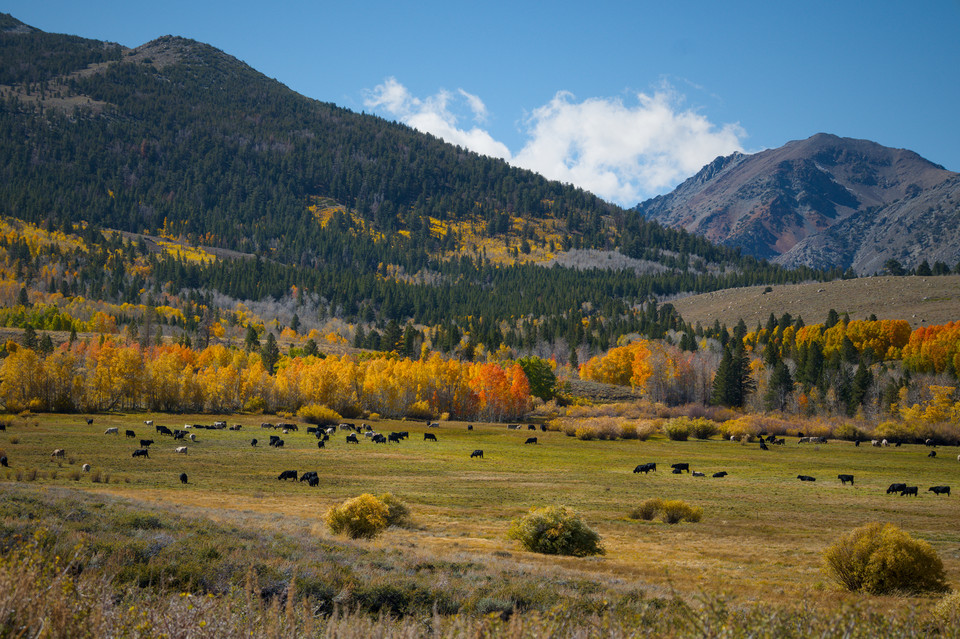
On a recent trip to the Eastern Sierra, I was able to catch the changing of the leaves to vivid yellows and oranges:
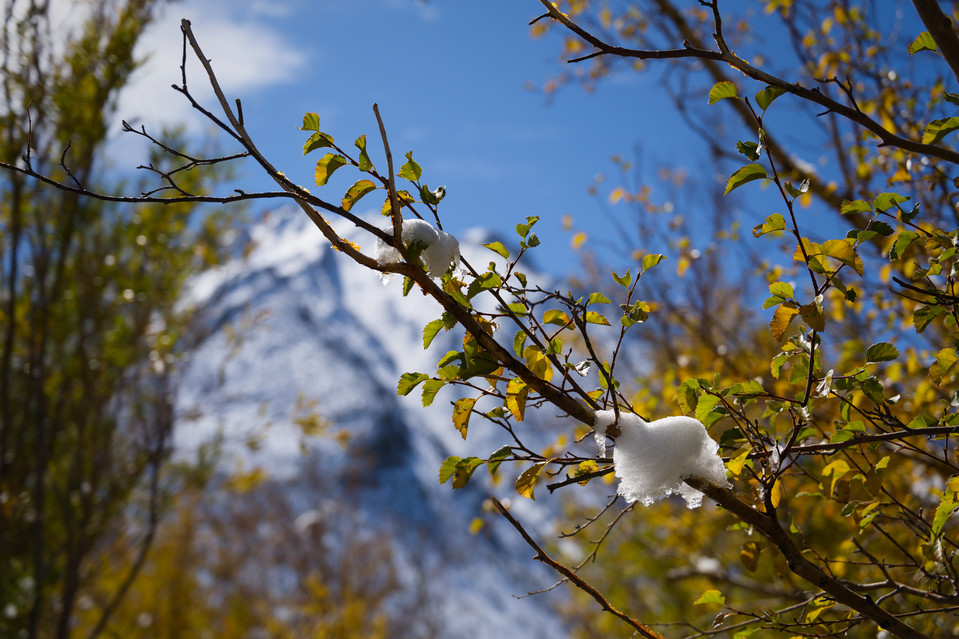
Serendipitously, an early season snowstorm occurred halfway into the trip. It was amazing to see the vibrant foliage suddenly set against a beautiful white backdrop:
Setting aside foliage for a moment, here is the Milky Way above Hot Creek Geological Site. The comet I posted previously, C/2025 R2 SWAN, can be barely seen in the full-resolution version as a pale green dot to the lower right of the Milky Way. This was taken a few nights before the previous picture, when it was not yet coincident with the Eagle Nebula, which can be seen in the upper half of the Milky Way.
Sunday, October 19, 2025
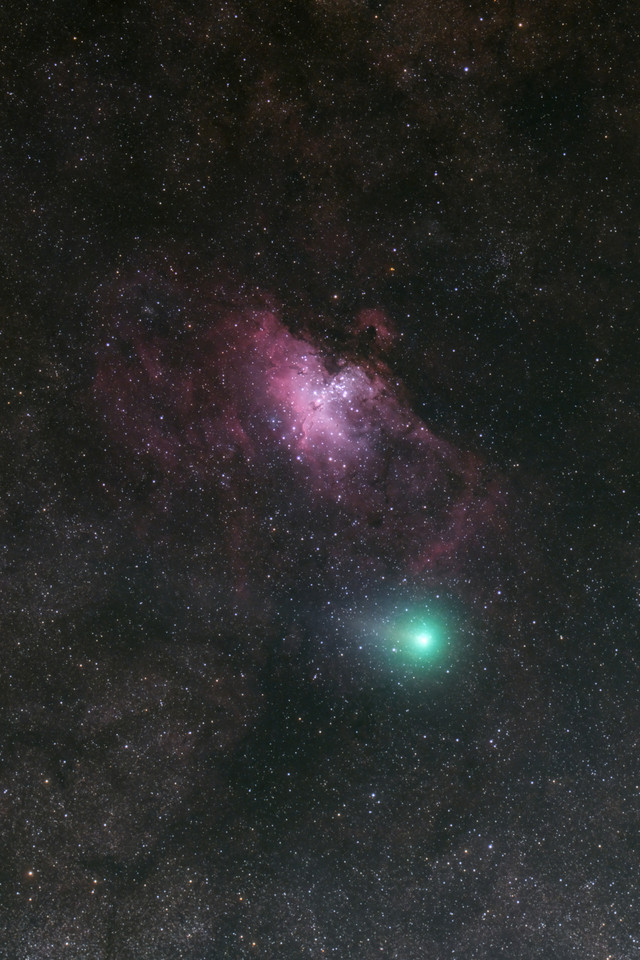
This is C/2025 R2 SWAN, a comet discovered using the SWAN instrument onboard the SOHO spacecraft, as it travels near the same region of sky as M 16, the Eagle Nebula:
Their proximity in the night sky shouldn’t be mistaken as real proxmity—while the Eagle Nebula is roughly 5-6 thousand light-years away, C/2025 R2 SWAN is expected to come as close as 39 million km to Earth.
Thursday, September 18, 2025
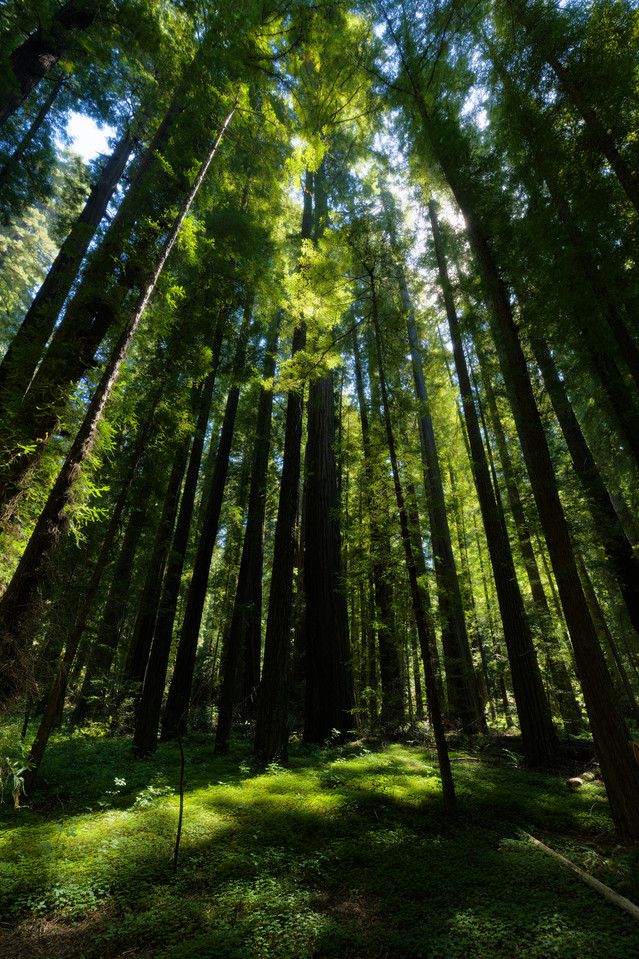
This summer, I was able to explore the Northern California and Southern Oregon coasts. Along the way, I hiked under the towering trees of Humboldt Redwoods State Park:
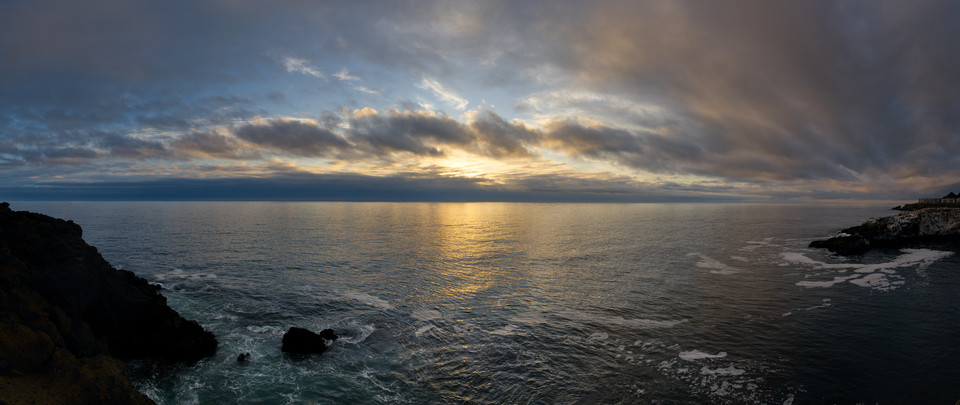
Witnessed a beautiful sunset at Pirate Cove:
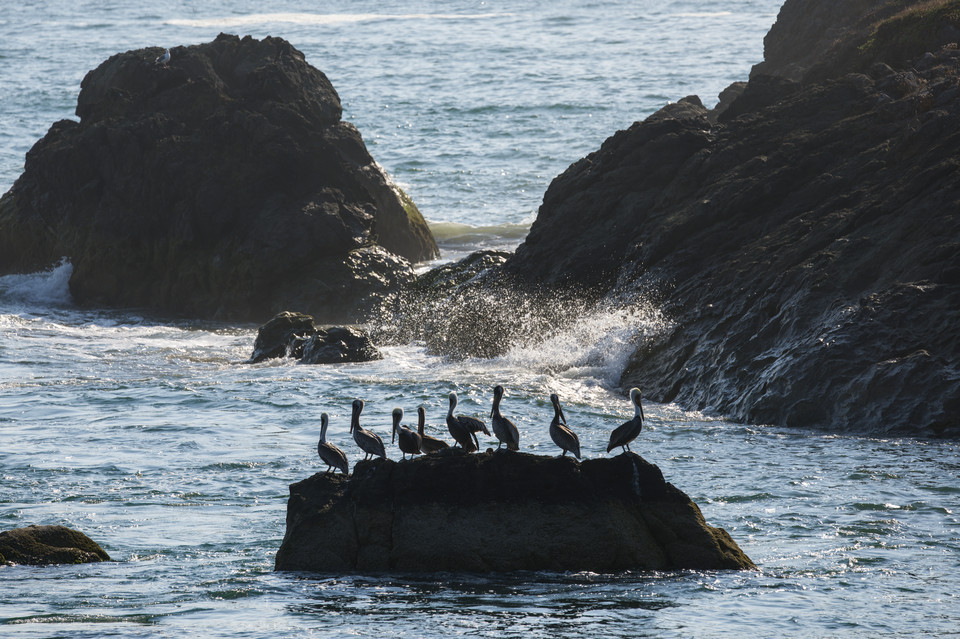
And observed brown pelicans against crashing waves near the Smith River Passage:
Those were only a few of the many breathtaking sights though, so do check out the linked albums!